According to Sagen, the necessity of bathing is to cleanse the body, refresh the mind, improve blood circulation, promote digestion and absorption, increase sweating, and excrete natron salts that have accumulated in the body.
The frequency and temperature of bathing that each person prefers varies depending on the region they live in, the foods they normally eat, and their occupation. People who eat gourmet food on a daily basis or who take in a lot of salt because they do vigorous exercise tend to accumulate natron salt in their bodies, and prefer more baths and higher water temperatures than people who normally eat simple foods. It also varies by region, with people who live on the warmer southern sea side needing to bathe more frequently and in higher water temperatures than people who live on the northern mountain side.
In the past, coastal cities in Osaka, Chugoku, Shikoku, and Kyushu had steam baths separate from bathing facilities. This was a way to desalt the body, but it disappeared after the Meiji Restoration with the spread of Western hygiene methods in cooler climates. Also, in Japan, which is surrounded by the sea, it is easy to unknowingly accumulate salt in the body, and there was a hygiene method to prevent illness by desalting through bathing, but as Japanese food became Westernized, people began to regularly eat bread, potatoes, jam, and other foods high in potassium compounds, and the ancient idea of treating illness by desalting disappeared.
Sagen's conclusion was that people who normally eat a simple diet of grains do not feel uncomfortable with fewer baths at lower temperatures, but people who normally eat a lot of meat and drink a lot of alcohol prefer more frequent baths and higher water temperatures in order to excrete the natron salts that have accumulated in their bodies.
I believe what Sagen was trying to convey was the benefits of bathing to desalinate, as well as the advantages of a simple diet.
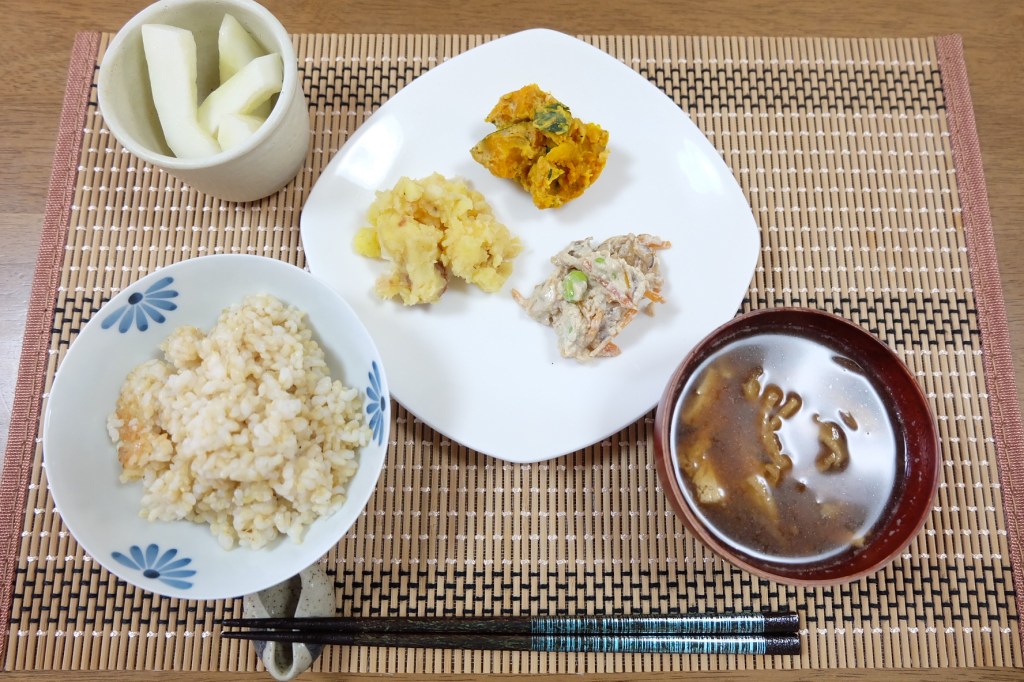
If you eat simple food on a regular basis (what Sagen calls proper food), you won't feel uncomfortable even if you don't bathe frequently, and you'll be able to stay healthy in body and mind. If you eat gourmet food on a daily basis, you'll need to bathe a lot, and you'll be more susceptible to illness, so you'll need more specialized medical care. In addition, gourmet food requires a lot of items, such as money, the effort and time it takes to cook, and tableware that suits the food. And yet, it's only the eyes and mouth that are pleased, and the time you spend enjoying the gourmet food passes by quickly. In that respect, simple food is easy to prepare, and although it may look meager, it fills you up when you eat it, and it puts less strain on the stomach.
After reading this chapter, I felt that I should normally eat simple meals, keep my body clean, and maintain a pure mind.
Source: Healthy Foods (published by Rural Culture Association, annotated by Hiroshi Maruyama, translated by Masanori Hashimoto)
18th, Oct. 2024: Taka
コメント
コメントを投稿